Creatine for Sleep Deprivation
Creatine is a well known sports-supplement used in its aid of hypertrophy and strength gain. But, as more research emerges about creatine, its benefits extend outside of just this.
This is particularly exciting for those of you juggling external commitments, families, kids, and other commitments with your lifting and training goals. Let’s explore.
To give you a quick recap of what creatine is:
Creatine phosphate is a naturally occurring compound produced in the body and stored primarily in:
Skeletal muscle
The brain
You’ll also find small amounts of creatine naturally in animal-based foods (meat and fish). While there are no naturally occurring plant-based sources, most modern creatine supplements are synthetically produced and suitable for plant-based diets.
Creatine plays a key role in the ATP–CP energy pathway, which fuels short, intense bursts of activity.
ATP (adenosine triphosphate) is the energy currency of your cells
During explosive efforts lasting under ~60 seconds (think heavy sets, sprints, or jumps), ATP loses a phosphate and becomes ADP (adenosine-diphosphate)
Creatine donates a phosphate to quickly “recharge” ATP so it can be used again
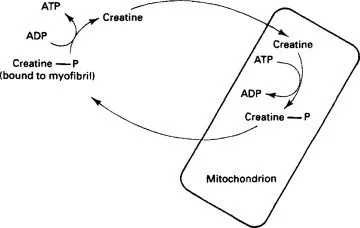
When you have larger creatine stores from consistent supplementation, it’s like having a larger stash of batteries that can be replaced much faster than if you run out, had to wait, travel to the store, and then purchase more batteries.
So, we know that this is useful for strength + muscle gain, but what about applications outside of this?
Creatine and Acute Sleep Deprivation.
Research into creatine’s effects on the brain is still developing - largely because studying brain tissue is far more complex (and ethically limited) than studying muscle.
The brain is an extremely energy-demanding organ, and like muscle, it relies heavily on ATP. When the brain is exposed to:
High cognitive demand
Stress
Prolonged wakefulness
…its phosphocreatine stores are depleted more rapidly.
This brings us to sleep-deprivation.
Supplementing with creatine can result in greater brain creatine stores, and can therefore handle greater energy demands when under stress.
Sleep deprivation is an example of a stressor on the brain.
Sleep deprivation is a powerful physiological and psychological stressor. When sleep is restricted, we typically see declines in:
Cognitive performance
Mood and motivation
Reaction time
Decision-making ability
Perceived energy and alertness
If we think of the brain like a muscle, this makes sense: greater energy demand + less recovery = faster depletion.
Emerging research suggests that supplementing with creatine can increase brain creatine stores, allowing the brain to better tolerate periods of high stress or sleep loss.
In one study (linked here), researchers investigated whether an acute, one-off dose of creatine could reduce the negative effects of sleep deprivation.
Study Design (simplified):
Participants: 15 healthy adults (8 female, 7 male), aged 20–28
Dose: 0.34 g of creatine per kg of bodyweight
~25 g for a 75 kg individual
Participants were tested:
Before sleep deprivation
During the night of sleep deprivation
After prolonged wakefulness
Each participant completed the protocol twice:
Once with creatine
Once with a placebo, separated by at least 5 days
What Was Measured?
Phosphocreatine levels
Cognitive speed
Memory
Language processing
Logic and numerical tasks
Processing speed
Subjective fatigue and mood
When tested, they were assessed on:
phosphocreatine levels
cognitive speed
memory
language
logic
numeric tasks
speed in processing time
When comparing their pre-sleep deprivation scores and post-sleep deprivation scores, the group that had an acute dose of creatine showed that they could answer questions faster and more accurately, were generally less affected by the sleep deprivation, and ‘felt’ less tired based on a questionnaire provided.
It’s worth noting that this particular study's results were only based on 15 healthy subjects (8 female, 7 male), aged 20-28, however, other studies have demonstrated similar results and benefits.
This study also highlighted the fact that more research is needed to determine the best dose of creatine, since they provided all participants with just 1 dose (0.34g of creatine per 1 kilogram of body weight).
But, this study, along with the growing evidence, suggests that there is benefit to acute high-dose supplementation of creatine.
The application here is this…
If you experience a night of poor-quality or decreased amount of sleep, taking a 1-off larger dose of creatine could help negate the effects of sleep-deprivation -even if you don’t already take a regular dose (0.3g of creatine per kilogram of body weight) daily.
Why this matters for lifters and athletes.
Since sleep plays a major role in performance, recovery, and strength expression, anything that helps preserve function during suboptimal conditions is valuable - especially with lots of athletes and lifters trying to balance work, families, and social events that can compromise sleep, with their strength + muscle gains and goals.
Creatine’s potential role in supporting brain energy metabolism under sleep deprivation adds another reason why it remains one of the most versatile supplements available.
But let’s also keep in mind that creatine is not a substitute for sleep. Chronic sleep deprivation still continues to impair performance and recovery, but in short-term circumstances, creatine may help you function closer to your baseline.